

 |
Texas Service Center Form I-140 Processing Time in October 2026


- No separate Texas I-140 processing time is currently published for October 2026.
- USCIS reports these cases under SCOPS.
- Processing time varies by I-140 category.
- Premium processing is available for eligible cases.
- I-140 approval does not mean the green card is approved.
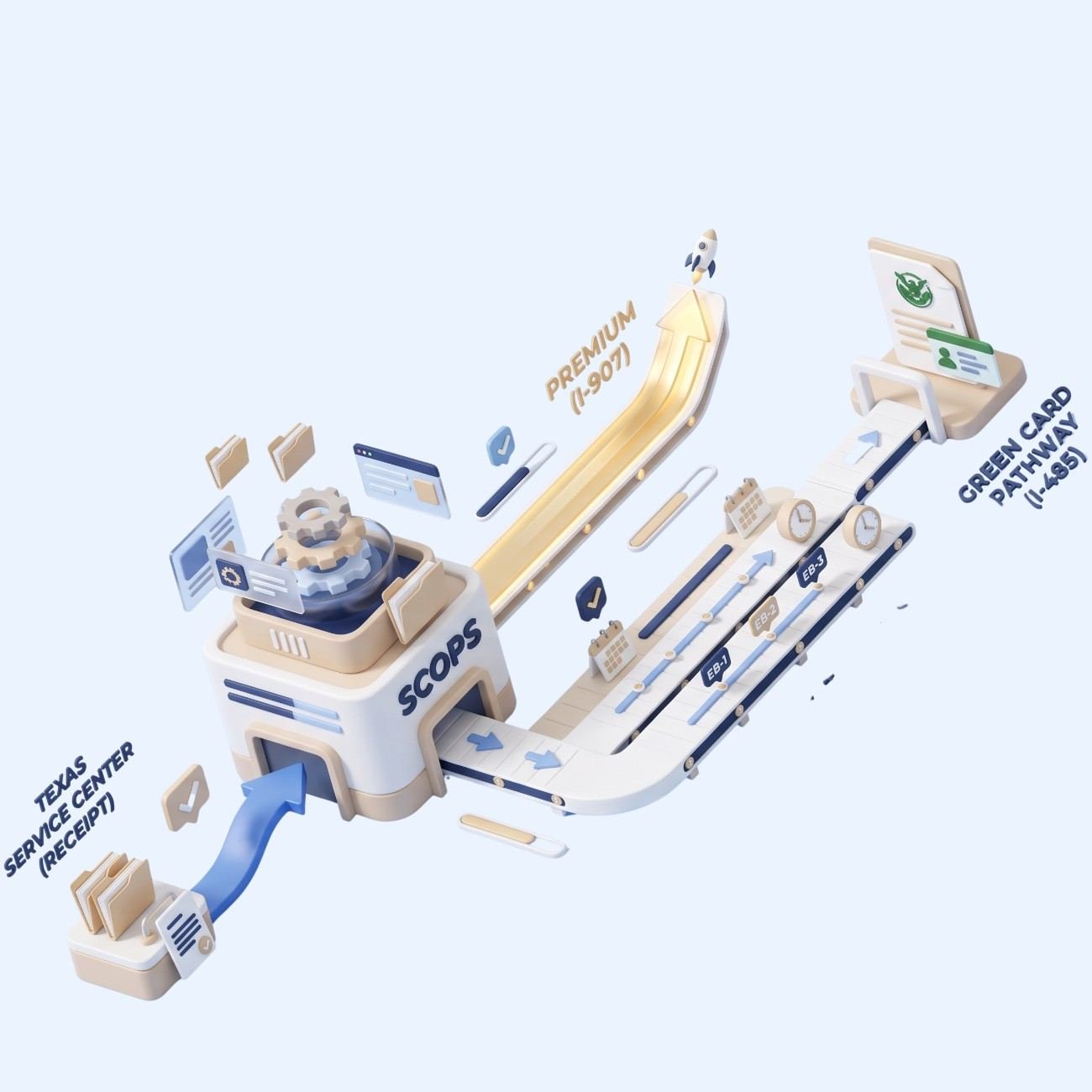
The Texas Service Center I-140 processing time is not currently presented as a separate Texas-specific figure for the I-140 categories covered by USCIS’s current processing-time system. Instead, applicable processing times are reported under Service Center Operations (SCOPS).
As of October 2026, the latest USCIS processing-time data available through the current system show different timeframes depending on the I-140 classification. For example, current SCOPS ranges include about 2.5-7.5 months for E21, 4-8.5 months for E31/E32, and substantially longer periods for some EB-1 and EB-2 NIW classifications. These are USCIS processing-time figures, not guaranteed decision dates.
Premium Processing is available for eligible I-140 classifications through Form I-907, but it does not guarantee approval. I-140 approval is also only one stage of the employment-based green card process.
To navigate these shifting reporting systems and avoid unnecessary filing delays, you can hire our specialized agency for professional assistance with your petition. We closely track the get professional assistance with Form I-140 to help you submit a fully compliant case tailored to current USCIS adjudication trends.
Texas Service Center I-140 Processing Time in October 2026
The most important point for October 2026 is that USCIS is not currently presenting these I-140 processing times as a separate Texas Service Center table. The current public reporting structure uses Service Center Operations (SCOPS) for the applicable I-140 categories.
The latest category-level USCIS processing-time data available in the current reporting cycle include the following:
| I-140 Category | Current Processing Office | Processing Time |
| EB-1 Extraordinary Ability (E11) | Service Center Operations (SCOPS) | 31-34.5 months |
| EB-1 Outstanding Professor/Researcher (E12) | Service Center Operations (SCOPS) | 15.5-19 months |
| EB-1 Multinational Executive/Manager (E13) | Service Center Operations (SCOPS) | 27-29 months |
| EB-2 Advanced Degree/Exceptional Ability (E21) | Service Center Operations (SCOPS) | 2.5-7.5 months |
| EB-2 National Interest Waiver (NIW) | Service Center Operations (SCOPS) | 29-32 months |
| EB-3 Skilled Worker/Professional (E31/E32) | Service Center Operations (SCOPS) | 4-8.5 months |
| EB-3 Other Worker (EW3) | Service Center Operations (SCOPS) | 7.5-12.5 months |
| Schedule A Nurses (NUR) | Service Center Operations (SCOPS) | 24.5-26 months |
These category-specific ranges reflect the current USCIS processing-time reporting structure rather than a Texas-only estimate. The latest published category data available for October 2026 show, for example, 31-34.5 months for E11, 2.5-7.5 months for E21, 4-8.5 months for E31/E32 and 29-32 months for EB-2 NIW.
Do not interpret these numbers as a prediction for an individual case. USCIS processing times describe how long it took the agency to complete cases under its published methodology. They are not guaranteed completion dates. USCIS also explains that premium-processing cases are excluded from its regular processing-time calculations.
Why Older Websites Show A Texas Service Center Number
USCIS has historically published processing times by individual service center, including the Texas Service Center. That is why older immigration articles and screenshots may show an I-140 processing time specifically for Texas.
The current system can instead identify Service Center Operations (SCOPS) as the processing office. Consequently, the fact that a receipt notice or previous correspondence references Texas does not mean USCIS will provide a separate Texas processing-time figure on the public processing-time page.
For a current case, the USCIS processing-time tool and the information associated with the case should take priority over an older Texas Service Center chart.
Does USCIS Still Publish A Texas Service Center I-140 Processing Time?
Not as a separate current I-140 processing-time entry in the reporting structure described above.
USCIS has moved relevant processing-time reporting to its current office and category structure. Current I-140 entries can appear under Service Center Operations (SCOPS) rather than under “Texas Service Center.”
This distinction matters because applicants sometimes search for “I-140 processing time Texas Service Center” and find older figures that were accurate under a previous reporting system but are no longer the appropriate current reference.
USCIS’s processing time states that the agency makes every effort to update processing times monthly and that the displayed information is based on data that are approximately one month old. USCIS continues to adjust its processing-time metrics to provide current information by form type and processing operation.
For October 2026, readers should therefore use the current USCIS Case Processing Times tool rather than assuming that a Texas-specific figure still applies.
Does the Texas Service Center Affect I-140 Processing Time?
The Texas Service Center can still appear in a petition’s history, filing information or correspondence. However, applicants should not assume that the public processing-time tool will provide a separate Texas estimate.
USCIS’s current system uses processing offices and classifications that can differ from older service-center charts. Current I-140 data are being reported under Service Center Operations (SCOPS) for the categories .
That means claims such as “Texas is faster than Nebraska” or “Texas takes X months for EB-2” should not be treated as current USCIS information unless the agency itself is presently publishing those figures.
The safest approach is to use the current USCIS processing-time tool and the processing office shown there.
I-140 Processing Time vs Green Card Processing Time
| Stage | Purpose | Separate From I-140 |
| PERM, where required | Labor certification for qualifying employer-sponsored cases | Yes |
| I-140 | Employment-based immigrant petition | – |
| Visa Bulletin | Shows immigrant visa availability and priority-date movement | Yes |
| I-485 / Consular Processing | Final permanent-residence stage | Yes |
This distinction is critical. I-140 processing time is not the same as employment-based green card processing time.
A faster I-140 decision does not automatically result in a faster green card if the priority date is not current.
Frequently Asked Questions About Texas Service Center I-140 Processing Time
What is the Texas Service Center I-140 processing time in October 2026?
USCIS does not currently publish a separate Texas Service Center processing-time figure for the I-140 categories discussed here. Current figures are reported under Service Center Operations (SCOPS). The timeframe depends heavily on the I-140 classification, ranging from several months to more than two years for some categories.
How long does I-140 take at the Texas Service Center?
There is no single current Texas-specific I-140 timeframe published by USCIS. The applicable estimate depends on the classification and the processing office shown in the current USCIS processing-time system. Older websites may show Texas-specific figures, but those should not replace the current USCIS data.
Does USCIS still publish Texas Service Center I-140 processing times?
Not as a separate current I-140 processing-time entry in the current reporting structure. USCIS currently reports applicable I-140 categories under Service Center Operations (SCOPS). This is why older Texas Service Center processing-time tables can differ from what applicants see today.
Does I-140 processing time vary by EB category?
Yes. USCIS reports different processing times for different I-140 classifications. Current SCOPS data show significantly different ranges for EB-1 extraordinary ability, EB-1 multinational managers, EB-2, EB-2 NIW, EB-3 skilled workers and other workers.
What happens if my I-140 is taking longer than the USCIS processing time?
First check your case status and the current processing time for your exact category and office. If the case is outside USCIS’s applicable inquiry timeframe, you may be able to submit a case inquiry. A delay does not automatically indicate that the petition has a problem.

Explore Form I-140 wait times, Nebraska Service Center trends, and Premium Processing rules below:
- Nebraska Service Center Form I-140 Processing Time
Details Form I-140 adjudication timelines at the Nebraska Service Center (NSC), analyzing case backlogs across EB-1, EB-2 (including NIW), and EB-3 categories, alongside key factors that trigger center-specific delays. - Form I-140 Processing Time: Current Updates
Breaks down current nationwide USCIS processing wait times for immigrant worker petitions, comparing service center queues, 80th-percentile completion medians across employment categories, and case inquiry thresholds. - Premium Processing Time (Form I-907): Wait Times & Cost
Explains expedited adjudication windows (15-day vs. 45-day) under Form I-907, detailing the $2,805 fee structure, RFE clock-reset rules, and category eligibility across employment-based immigrant petitions.
Akash Pundir is the Chief Operating Officer at Document Evaluation LLC, bringing over 5 years of international business operations and legal support experience across the United States, Australia, and India. He has overseen the strategic positioning and analysis of over 1,000+ complex USCIS cases, specializing in guiding expert evaluation teams to draft high-stakes Expert Opinion Letters (EOL), Academic Equivalencies, and defense packets for H-1B, EB-2 NIW, RFEs, and NOIDs. Driven by digital transformation, Akash ensures every evaluation adheres strictly to the latest USCIS legal frameworks and compliance benchmarks.