

- File Form N-400 correctly and completely.
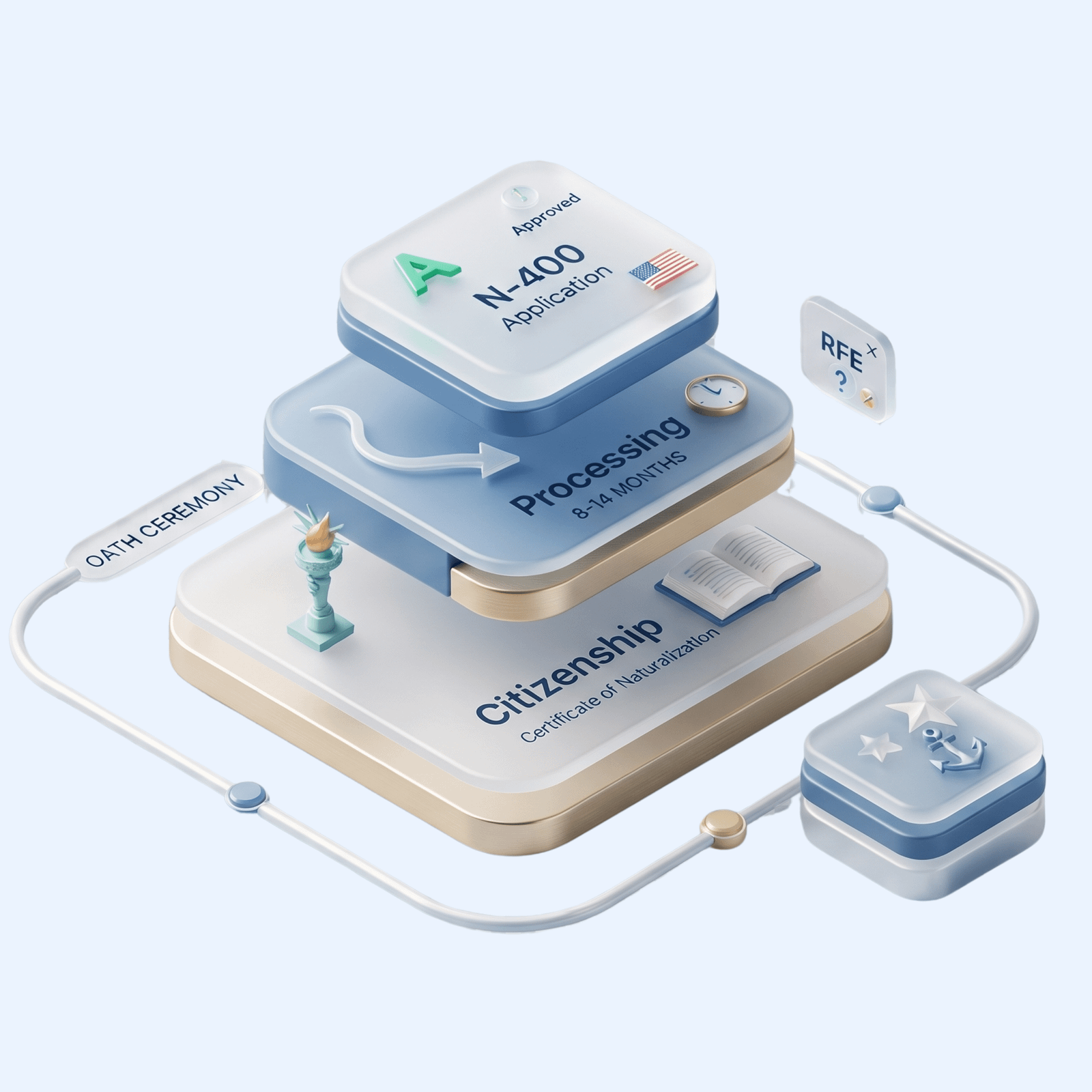
- Many people wait 8 to 14 months, depending on the office.
- Military applicants often finish faster in just 3 to 6 months.
- Your interview date, background check, and paperwork all affect the wait.
- If any document is in another language, get it certified and translated early. This is a common reason people get an RFE (a request for more evidence).
For most immigrants, filing Form N-400 is the last step before becoming a US citizen, but “last” doesn’t mean fast. Some people finish in six months. Others wait more than a year for the same process. Why the gap? It mostly depends on which USCIS field office picks up your case.
That’s why it helps to know what happens at each step. Not just the big picture, but the small things too: what causes delays, what USCIS wants from you, and when you need to act instead of just wait.
What Is Form N-400 (Application for Naturalization)?
Form N-400 is the application that green card holders file when they are ready to become US citizens. USCIS doesn’t just rubber-stamp it; they’re checking whether you’ve actually settled into life here, not just lived here on paper.
Here’s what you’ll generally need to qualify for Form N-400:
- You’re at least 18 years old
- You’ve held your green card for 5 years or just 3 if you’re married to and living with a US citizen spouse continuously.
- You’ve maintained continuous residence, meaning no long stretches abroad that could break your residency.
- You’ve been physically present in the US for at least half of that required residence period
- Your record checks out on “good moral character.” USCIS reviews your criminal history, tax filings, and honesty throughout the process, usually looking back 5 years (or 3, for spouses of citizens)
- You pass the English and civics tests, unless your age and years of residency qualify you for an exemption.
Once USCIS approves your N-400 and you’ve completed the Oath of Allegiance ceremony, that’s it; you’re officially a US citizen.
Did You Know?
You can file Form N-400 up to 90 days before completing your required permanent residency period, as long as you meet all other eligibility requirements by the time USCIS reviews your application.
What Is The N-400 Processing Time In 2026?
| Application Type | Processing Time |
|---|---|
| Standard N-400 Application | 8 to 14 Months |
| Military N-400 Application | 3 to 6 Months |
What Is The Standard N-400 Timeline?
The N-400 naturalization process is quite variable in duration. Most applicants see a timeline of 8 to 14 months, though the national average now sits at 9.5 months, so many applicants are waiting longer than they used to. The single biggest factor here is your local USCIS field office.
Some offices move through cases in as little as 2.5 months, while others dealing with heavier backlogs can stretch out to 18 months. In short, no two cases look exactly alike; it all comes down to location and individual circumstances.
Standard N-400 Application Steps
Step 1: Receipt Notice (2-4 weeks)
Once you file your N-400, USCIS sends you a receipt notice (Form I-797), confirming that they have your application and that it is now in the system. This is the document that gives you your receipt number, which becomes your reference point for tracking the case going forward. Most people see this land in their mailbox within 2 to 4 weeks.
Step 2: Biometrics Appointment (3-8 weeks later)
Next up is the appointment letter. It’ll tell you when and where to show up at an application support center: fingerprints, a photo, and your signature. That data gets forwarded to the FBI for a background check. This typically happens 3 to 8 weeks after your receipt notice shows up.
Step 3: Background Checks (2-6 months)
After biometrics, the FBI digs into your record: criminal history, immigration file, and national security screening. There’s nothing for you to do here; USCIS and the FBI will handle it. Timing varies a lot depending on case complexity and current backlogs, so this stretch can run anywhere from 2 to 6 months.
Step 4: Interview Scheduling (6-12 months after filing)
This phase is the step that carries the most weight. You’ll head to a USCIS office for an interview that covers three things:
- The English test: speaking, reading, and writing
- The civics test questions on US history and government
- A review with the officer to confirm the details on your application
This step varies the most by location, with interviews scheduled anywhere from 3 to 12 months out depending on your local office’s backlog.
Step 5: Oath Ceremony (2-8 weeks after interview)
Once you’ve passed the interview and gotten approved, all that’s left is the Oath of Allegiance, the ceremony where you formally pledge allegiance to the US. From there, you’ll receive your Certificate of Naturalization, the legal proof that you’re officially a citizen. Most people wait 2 to 8 weeks after approval to take the oath.
What Is The Military N-400 Timeline?
Military N-400 applications route through the Nebraska Service Center in Lincoln, the central intake point for all service-member naturalization filings. For current military members, the whole process typically wraps up in 3 to 9 months from the filing date, depending on their duty station. Initial processing at the Service Center before the case even goes out for interview scheduling usually takes 120 to 180 days once background checks clear. However, plenty of active-duty cases move faster once they’re flagged for military handling.
Military N-400 Application Steps
Step 1: Receipt Notice (1-2 weeks)
Form I-797 shows up within 1 to 2 weeks of filing, confirming USCIS has your case logged and assigned a receipt number.
Step 2: Biometrics Appointment (3-6 weeks after receipt notice)
Military applicants often go through the Military Help Line, which streamlines this step considerably. If you’ve already got fingerprints on file from a prior background check or immigration filing, USCIS can just reuse them instead of scheduling you for a new appointment. Stationed overseas? Biometrics can be handled at a US military base, an overseas USCIS field office, or an embassy/consulate, so there’s no need to fly back stateside.
Step 3: Background & Security Checks (2-3 months)
This stage tends to move faster for service members than for civilian applicants. The USCIS Military Liaison works directly with both the applicant’s command and the FBI, keeping cases from stalling.
Step 4: Citizenship Interview & Test (scheduled within 3-5 months of filing)
Interviews can take place on military installations or over secure video conference, a real advantage for anyone deployed, stationed overseas, or otherwise unable to reach a domestic field office. You can also request a specific office for your interview, including one near your duty station, by attaching a cover letter to your application.
Step 5: Oath Ceremony (same day or within weeks of interview)
USCIS tries to move service members through as fast as possible, so many take the Oath of Allegiance the same day as their interview. Overseas applicants usually take the oath at whichever consulate or installation hosted their interview.
Below are some reasons why some N-400 applications take longer:
Below are some reasons why some N-400 applications take longer:
1. Missing Documents
Incomplete applications tend to trigger a Request for Evidence (RFE) or additional review. Once that happens, your case basically delays until you respond, and depending on what’s being asked for, you’ll have anywhere from 30 to 87 days to get it together. That alone can add 2 to 3 months to your timeline.
2. Background Check Delays
Security clearances can drag on for reasons that have nothing to do with wrongdoing. Applicants who’ve lived in several countries, have a common name that keeps triggering false matches, or have any past interaction with law enforcement, even something minor and long since resolved, are often flagged for extra scrutiny.
3. Interview Rescheduling
If you miss your interview or need to reschedule it due to a scheduling conflict, it is not just a matter of losing a few days. You typically get bumped to the back of the line at your local field office, which can mean months of additional waiting depending on how backed up that office already is.
4. Translation Or Document Issues
Foreign-language documents with sloppy translations or missing certifications will get kicked back for correction before USCIS moves forward. This one’s largely avoidable; it’s entirely on the applicant to get right before filing.
5. High Field Office Workloads
Field offices vary in their workloads. Some handle a much heavier volume of naturalization cases than others, so two applicants with clean, identical paperwork can land on entirely different timelines just based on where they filed.
Which Foreign Documents May Still Matter During Naturalization?
Many applicants assume document verification is over once they’ve got their green card. But during the N-400 process, USCIS can circle back to certain foreign records if they’re relevant to your eligibility, essentially re-checking the paper trail that got you permanent residency in the first place.
Examples include:
- Birth certificates
- Marriage or divorce records
- Adoption documents
- Court records
- Educational credentials
- Name change documents
If any of these records are in a language other than English, the certified translations need to be complete, accurate, and consistent with the originals; every stamp, date, and name should match exactly between the source document and its translated version.
In some cases, applicants may also need to verify foreign educational qualifications or clear up overseas documentation during the naturalization interview, say, if a name on a diploma was spelled differently before and after immigration. Getting these records sorted out ahead of time, instead of scrambling right before the interview, can help you avoid unnecessary questions or delays.
Frequently Asked Questions
What is Form N-400?
Form N-400, the “Application for Naturalization,” is what lawful permanent residents (green card holders) file with USCIS when they’re ready to become US citizens. USCIS uses it to check whether you meet the legal bar for citizenship: residency, physical presence, good moral character, all of it.
How long does the N-400 process usually take?
As of 2026, most applicants are looking at 8 to 14 months, with a national average around 9.5 months for completed cases. Where you fall in that range depends largely on your local field office; some move through their backlog much faster than others.
What is the fastest way to get US citizenship?
Active-duty military members have it considerably easier, often finishing up in just 3 to 6 months. They get streamlined processing, faster background checks, and can sometimes have their interview and oath ceremony happen the same day at a military installation.
What are the main eligibility requirements for N-400?
You need to be at least 18 years old. You must have had a green card for 5 years or just 3 years if you’re married to a US citizen. During that time, you also need to have actually lived in the US for at least half of it. On top of that, you need good moral character, and you have to pass both the English test and the civics test.
What happens during the N-400 interview?
The USCIS officer sits down with you and goes over your application, checking that everything matches up. After that, you take the English test, including speaking, reading, and writing, and then the civics test, which covers US history and how the government works.
What can cause a delay in my N-400 application?
Most delays trace back to missing paperwork. That can lead to a request for evidence, which puts your case on hold for months while you gather what’s needed. Other things that slow things down include background checks that take a while, missed appointments, and field offices that are already busy.
Do I still need to worry about foreign documents?
Yes, and people often assume this part’s behind them once they’ve got their green card; it’s not. USCIS may request your birth certificate, marriage records, or other supporting documents again if anything appears incomplete or uncertified. If the English translations weren’t certified the first time around, or something’s incomplete, expect it to come up.
What is the final step to becoming a citizen?
The Oath of Allegiance. You stand up, pledge loyalty to the US, and walk out with your certificate of naturalization in hand; that’s the piece of paper that makes it official.
Conclusion
Filing Form N-400 is the final step in a green card holder’s path to US citizenship and possibly the one that matters most. Most applicants are looking at 8 to 14 months, though the real number depends a lot on your local USCIS office’s workload and the specifics of your case. Active-duty military members typically move much faster, often finishing in 3 to 6 months.
One thing holds regardless of which track you’re on: getting your paperwork right upfront, complete, accurate, and properly translated is the single best way to avoid the delays that catch other applicants off guard.
Navigating the U.S. Citizenship Process? Track N-400 Timelines for 2026
From standard 8 to 14 month timelines to military expedites, avoid processing delays and RFEs with clear preparation and complete documentation.
Need Certified Translations for Your U.S. Visa Application? Explore our expert guides below:
- Green Card Document Translation Guide
Learn how to translate documents for a U.S. green card application, understand USCIS certification requirements, and avoid common translation mistakes. - EB-2 Visa Translation Checklist
Discover which documents require certified translation for an EB-2 visa and how to meet USCIS requirements before filing your application. - Avoid Visa Translation Mistakes
Find out how translation errors can delay your visa application and learn best practices for submitting accurate, USCIS-compliant translations.