

 |
|
How Translation Errors Can Delay or Damage Your Visa Application
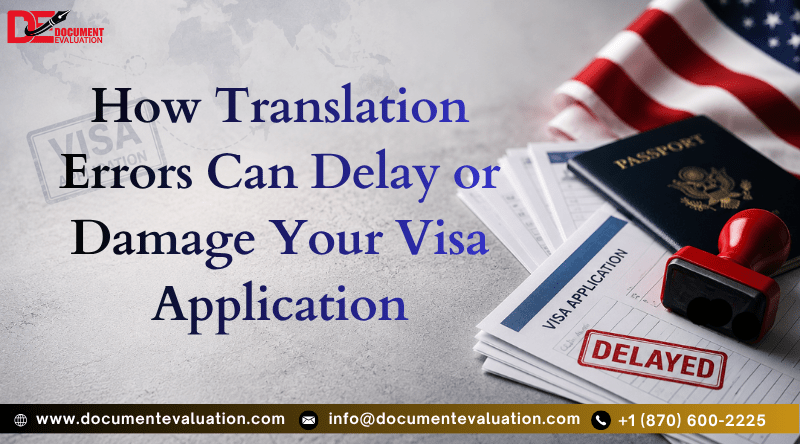

If you’re spending months gathering documents, paying fees, and triple-checking every form, only to have your visa stuck in “administrative processing” for eleven weeks. When the answer finally comes, a translator wrote “issued by” instead of “witnessed by.” One word. Eleven weeks of silence. Thousands of dollars at risk.
Translation errors don’t look theatrical. They look like typos on a page. But in the world of immigration and visas, they can damage a perfect application. Here’s what actually happens when a translation goes wrong and how to make sure it never happens to you.
To ensure your entire foreign document package meets strict federal guidelines, you can hire our specialized agency to provide accurate Certified Translation Services for USCIS.
Why Translation Accuracy Matters More Than People Think
Many applicants treat certified translation as nothing more than a procedural requirement. Get the document translated, attach a signature, and move on. In reality, immigration officers and evaluators rely on that translated document as if it were the original. The translation is the document for their decision-making.
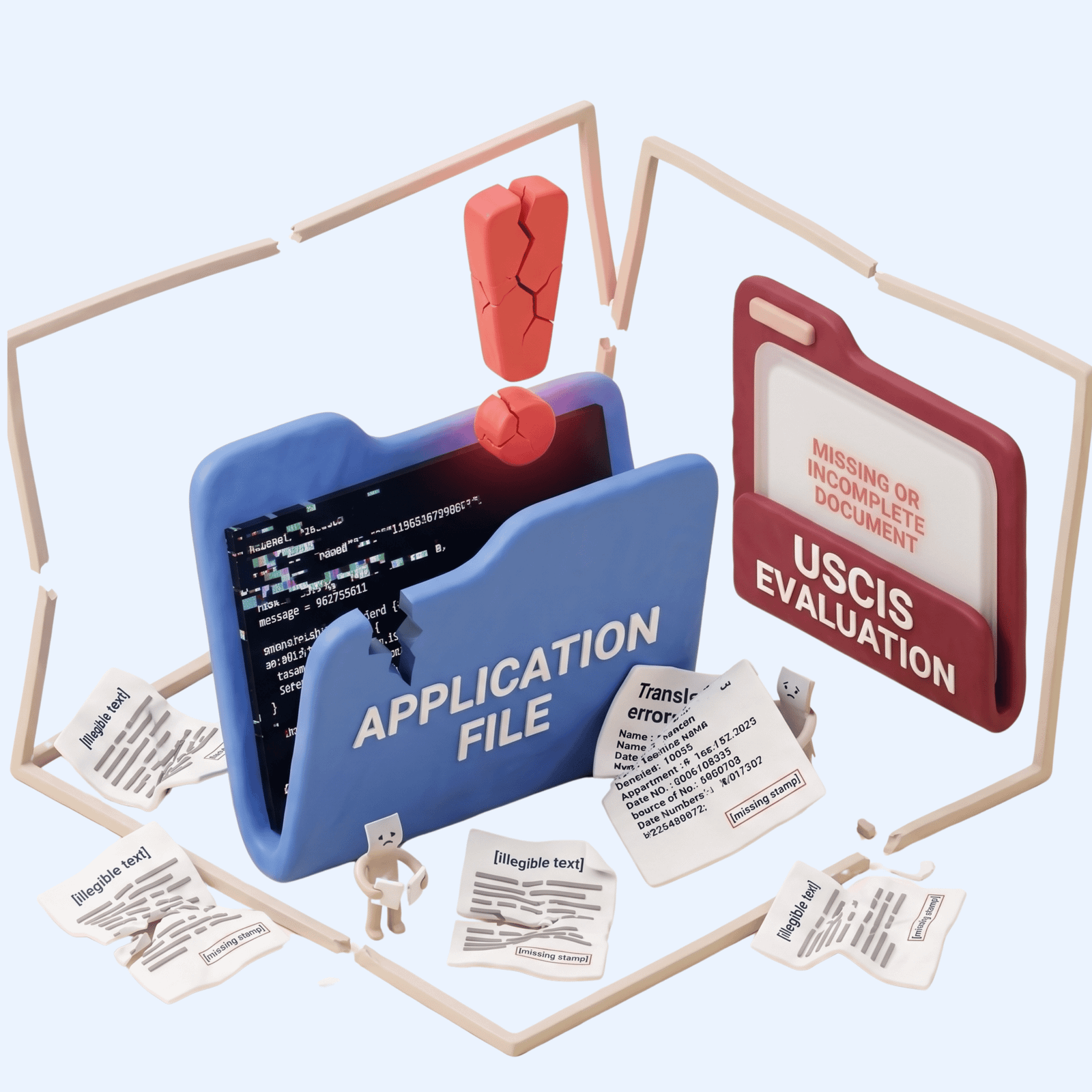
So when there’s an error, even a small one, it doesn’t just create confusion. It creates doubt. And doubt is expensive in immigration processing, because officers are trained to resolve problems by asking for more evidence, extending review timelines, or denying outright when something doesn’t make sense.
Top 5 Consequences of Translation Errors
- RFEs (Requests for Evidence)
The most common outcome. A pause in your case while USCIS or the consulate asks for clarification or resubmission. Can add 60 to 180 days depending on backlog. We’ve seen H-1B cases stretch from four months to nearly a year over one badly translated employment letter. - Outright refusal
Happens when the error touches a material fact: date of birth, name, marital status, financial figures. Officers aren’t being harsh; if the translation contradicts other paperwork, it’s flagged as an inconsistency, even if the mistake was honest. - Misrepresentation accusations
The most worrying one. If an error makes it look like false information was given, even unintentionally, it can be treated as misrepresentation. In the US, a willful misrepresentation finding under INA 212(a)(6)(C) can mean a permanent bar from future visas. Proving lack of intent afterward is genuinely challenging. - Credential evaluation delays
Mistranslated transcripts or degree certificates can throw off services like WES or ECE. A wrong grade scale or course title can get a degree marked “not equivalent,” affecting sponsorship, licensing, or admissions.
- Loss of trust in the whole file
One inconsistency makes them survey everything else more closely; a single translation error can cast doubt over the entire application, not just that one.
Real-World Scenario | What Happens When a Translation Contains Errors?
Many applicants figure a small translation mistake can’t really hurt them. But even something minor can slow your case down, lead to a Request for Evidence (RFE), or create mismatches
How Can Translation Errors Affect an Immigration Case?
A client came to Document Evaluation LLC to get a bachelor’s degree evaluated for US immigration purposes. The evaluation itself mattered, sure, but so did the accuracy of the translated supporting documents; any mismatch between the original records and the English version could’ve caused problems.
Since this was the client’s first time going through the process, they had a fair number of questions and wanted to be sure everything met USCIS requirements before moving forward.
How Did Document Evaluation Help?
Instead of just running the evaluation and handing it back, the team walked the client through the whole documentation process. Went through the submitted records, answered questions as they came up, and made sure the translations matched what the evaluation actually required. What stood out to the client was how patient and responsive the team was and that they finished the work ahead of schedule, which took a lot of the stress out of a process that had initially felt overwhelming.
What Can You Learn From This Case?
Translating a document is about far more than just replacing one language’s words with another’s. Names, dates, academic credentials, every official detail, all of it needs to line up accurately across every document you submit.
Even one small slip can confuse or hold things up in the immigration process. Working with people who understand both certified translation and immigration paperwork reduces that risk and gives your application a strong, accurate foundation from the start.
Getting the translation right can help keep your case moving, no matter what you are submitting, whether it’s foreign educational records, civil documents, or evidence for a petition.
Tips From Document Evaluation For Your Translations
- Always use a certified or professional translator go with a certified translator who’s actually handled legal or immigration documents before.
- Request a certification letter with every translation. Most consulates and agencies (USCIS included) require a statement affirming the translator is competent and the translation is complete and accurate.
- Cross-check names, dates, and numbers against every other document in your application. Consistency matters as much as accuracy.
- Keep the original document format visible. A faithful translation should mirror the layout of the original: stamps, seals, and signatures noted, not omitted.
- Get a second opinion on anything unusual. If there’s a regional term or abbreviation involved, ask the translator to walk you through why they chose it.
- Never translate your documents, even if you’re fluent in both languages. Most authorities won’t accept self-translated documents, and it also removes an objective check on accuracy.
Frequently Asked Questions
Does a small translation error automatically lead to visa denial?
No, a minor error usually results in an RFE, giving the applicant a chance to submit a corrected version instead of getting an outright rejection. The real risk of denial comes in when the mistake touches something material, like a name, a date, or a financial figure. Officers know the difference between a clerical slip and something that actually changes what the application is claiming.
Can I translate my own documents if I’m fluent in both languages?
No matter how good your language skills actually are. The requirement isn’t about fluency; it’s about having an independent third party involved, mainly to keep things objective and accountable. That translation also needs a signed statement from the translator confirming its accuracy and their competency. Self-translated documents get rejected on this ground alone, fluency or not.
What is a certified translation exactly?
Basically, it’s a translation that has a signed statement attached to it from the translator or the agency, saying the work is complete and accurate as far as they know. Skip that statement, and most agencies won’t even count the document as proper evidence. So really, it’s that signed piece that gives the translation its legal weight, not just the words on the page.
How long does it take to fix a translation error after submission?
There’s no fixed answer; it depends on the agency and how backed up they are at the time. As a general range, resolving the issue through a corrected submission plus the RFE response tends to add 60 to 180 days. Busier agencies, or peak filing season, can push that even longer. It’s worth building this delay into your timeline from the start rather than getting caught off guard by it.
Can a translation error be considered fraud?
Yes, potentially, it can be read as misrepresentation if the mistake touches a material fact, even when there was zero intent to deceive. That’s really the whole reason immigration filings take translation accuracy so seriously. Once the file is submitted, proving you didn’t mean to make the mistake is a much harder position to be in than just avoiding the error in the first place. Which is precisely why it’s worth sticking to qualified, certified translators in the first place.
Do all visa categories require certified translations?
Yes, basically any supporting document that isn’t already in the language the receiving country or agency needs. For US immigration, that’s English, though the exact rules can shift a little from consulate to consulate. It’s worth checking the specific standards for your visa category and jurisdiction instead of making assumptions. People skip this step more often than you’d think, and it ends up costing them time later.
What should I do if I discover an error after submission?
First, contact the relevant agency or your immigration attorney as soon as you notice the mistake. From there, you’d prepare a corrected translation and submit it through the proper channel. It’s a sensible idea to attach a short cover letter explaining what was corrected and why. Acting quickly on these issues demonstrates your commitment and can help reduce any negative impact on the case.
Conclusion
Translation errors are one of those quiet risks in the visa process that don’t get nearly enough attention until they cause a problem. The reassuring news is that they’re almost entirely preventable. A qualified, certified translator like Document Evaluation and a little patience can save you months of delay and a lot of unnecessary stress.
If there’s one thing we’ve learned after years of reviewing these cases, it’s this: the documents that cause the fewest problems are the ones nobody rushed. Give your translations the same care you’d give the rest of your application, because to the officer reviewing your file, that translated page is your original document.
Explore More Certified Translation Guides & USCIS Resources:
- Green Card Document Translation: USCIS Requirements Explained
Learn which documents require certified translation for a U.S. green card application, USCIS translation rules, certification requirements, common mistakes, and how accurate translations help prevent processing delays. - How to Translate Documents for Visa Applications
Understand the complete visa document translation process, including certification requirements, eligible translators, required documents, and practical tips to ensure your application meets USCIS standards. - How Certified Translation Services Help Prevent USCIS RFEs
Discover how professionally certified translations reduce the risk of Requests for Evidence (RFEs), eliminate document errors, and strengthen immigration, visa, and green card applications.
Akash Pundir is the Chief Operating Officer at Document Evaluation LLC, bringing over 5 years of international business operations and legal support experience across the United States, Australia, and India. He has overseen the strategic positioning and analysis of over 1,000+ complex USCIS cases, specializing in guiding expert evaluation teams to draft high-stakes Expert Opinion Letters (EOL), Academic Equivalencies, and defense packets for H-1B, EB-2 NIW, RFEs, and NOIDs. Driven by digital transformation, Akash ensures every evaluation adheres strictly to the latest USCIS legal frameworks and compliance benchmarks.
