Receiving a Request for Evidence from USCIS is already stressful enough. You collect documents and wait for approvals, keep track of letters and documents, and try to determine what is required for your case by the USCIS; before you know it, your deadline is gone. As a result, your file is now in disorder. Maybe you were just busy with other things. Maybe your attorney made a mistake. Maybe the RFE notice got buried in a pile of mail or flagged as junk in your inbox. Whatever the reason, you’re now past the USCIS RFE response deadline, and you’re wondering if your immigration case is over.
It’s not necessarily over. But you do need to act fast, and you need to act smart.
It explains what happens if you miss an RFE deadline, your options, and how to approach each one. To mitigate the risk of automatic denial and salvage your application, you can secure professional assistance through our dedicated USCIS RFE response service. Hiring a specialized agency ensures your late filing argument and supporting evidence are presented persuasively to give your case the best chance of recovery.
What Is A USCIS RFE, And Why Does The Deadline Matter?
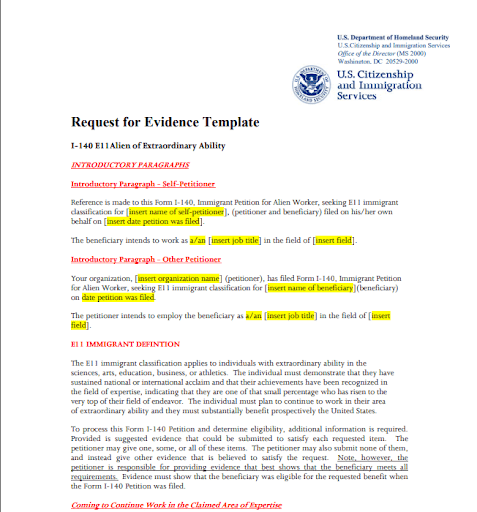
A USCIS RFE (Request for Evidence) is just the government asking for more paperwork. It’s not a denial; they’re basically saying, “We can’t decide on your case yet because something’s missing.” You’ll get a letter telling you exactly what they need, and it’s your chance to provide the missing information and keep your application moving.
The deadline is everything. You usually get 30 to 90 days, and USCIS is strict about the deadline; your response has to arrive by that date, not just be mailed out. Miss it, and they’ll decide without your missing evidence, which almost always means a denial. So don’t sleep on that date; respond on time and give them everything they ask for. That’s your best shot at approval
What Happens If You Miss The RFE Deadline?
If you fail to respond by the required due date, you will typically experience the following case processing as a result:
- Your application will be adjudicated on the record: USCIS will still proceed with a decision based on your original submission; therefore, if the RFE was requested for missing or insufficient materials, these deficiencies will still exist, and the officer may deny the petition.
- You will receive a Denial Notice: Within weeks or months (depending upon servicing center workload) after a denial, you may receive a formal Denial Notice detailing the basis of the denial, which will typically be the same basis for the RFE.
- Your status may be affected: Based on the type of application, a denial could have downstream impacts on your Visa status/work ability/pending Green Card application. This makes it important that the response time remains a priority.
Can You Submit A Late RFE Response?
This query is the first question most people ask, and the answer is that it depends on timing.
If the Deadline Has Just Passed (Days, Not Weeks)
USCIS has discretion in limited situations, but there is no formal process to request a deadline extension after the fact for standard RFEs. That said, if you submit a late response very shortly after the deadline, sometimes within a few days, there’s a chance it may still be considered, especially if USCIS hasn’t yet adjudicated the case. Don’t rely on this option. But don’t try, either.
If you have your complete response ready and the deadline passed very recently, submit everything immediately, but understand that USCIS has no legal obligation to accept it. If they have already issued a denial, your response will not stop that process. Include a cover letter explaining the delay and any supporting documentation for why the response was late (medical emergency, attorney error with documentation, etc.).
If A Denial Has Already Been Issued
If you’ve received a denial notice, the window for a late RFE submission is effectively closed. At this point, your options shift to post-denial remedies (covered below).
Before You submit Anything late, Check your case status online first
Go to the USCIS Case Status Online page and enter your receipt number. If the status still shows “Response To RFE Was Received” or “Case Is Being Reviewed,” USCIS may not have adjudicated your case yet. If it shows “Denied,” your late response will not be accepted.
This quick check can save you time and prevent false hope.
Can You Call USCIS About A Missed Deadline?
You can call the USCIS Center at 800-375-5283, but be prepared: Tier 1 agents can’t reopen your case or extend deadlines. They can only tell you your current case status. A Tier 2 officer may offer limited guidance, but ultimately, a missed deadline requires formal action (motion or refile), not a phone call.
Your Options After Missing The RFE Deadline
Option 1: File A Motion To Reopen (Form I-290B)
If your petition or application has been denied, the most direct path forward is filing a Motion to Reopen using Form I-290B (Notice of Appeal or Motion).
A motion to reopen asks USCIS to reconsider the denial based on new facts or evidence, specifically, the evidence you would have submitted in response to the RFE. For this motion to succeed, you generally need to demonstrate the following:
- The evidence existed before the denial (i.e., you’re not manufacturing new facts)
- There was a legitimate reason why the evidence wasn’t submitted on time
- The evidence is material: it would actually change the outcome
Filing fee: Currently $675 for most form types (e.g., I-140), but always verify the latest fee on the USCIS I-290B webpage before filing.
Filing deadline: Motions to Reopen must generally be filed within 30 days of the denial notice (33 days if the notice was mailed). If you’re outside the US, the window may differ.
Tip: Don’t just submit the missing documents with your I-290B. Write a detailed cover letter explaining the circumstances of the missed deadline and why the evidence is legally sufficient to overcome the RFE. An immigration attorney can make a significant difference here.
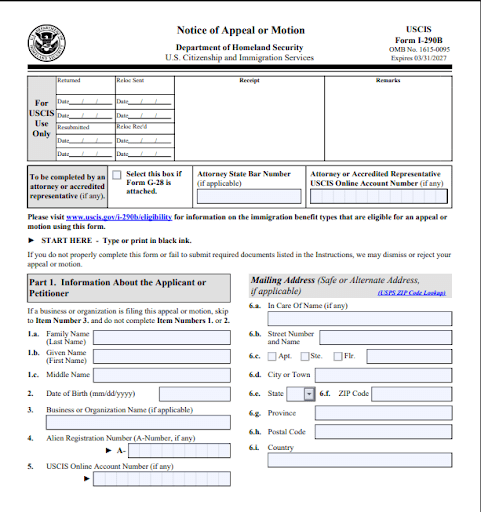
Image Credits – USCIS.gov
Option 2: File a Motion to Reconsider
A motion to reconsider is slightly different from a motion to reopen. Instead of presenting new evidence, it argues that USCIS made a legal or factual error in the denial. This option is less commonly applicable in missed-deadline scenarios, but if the RFE itself was issued improperly, or if USCIS applied the wrong legal standard, the motion could be a valid avenue.
Motions to reconsider are filed on the same form, I-290B, within the same 30-day window.
Often, attorneys will file both a Motion to Reopen and a Motion to Reconsider simultaneously as alternative grounds.
Option 3: Refile Your Petition Completely From The Beginning
For petition-based cases (like H-1B, EB-2, and EB-3), re-filing is sometimes the only option available. If there were any deficiencies in the original application, not just the missing RFE response, you may need to refile.
“Re-file” means a new application, new filing fees, a new priority date (mostly), and a new adjudication time. It is not optimal, but it may be your best option going forward in one of these scenarios:
- You have also exceeded the 30-day motion deadline
- There were other problems with the underlying petition that would not permit you to prevail on a motion
- There have been changes in immigration law, or there have been changes in your employment since the original filing.
Comparison of Motion To Reopen vs. Motion To Reconsider vs. AAO Appeal
Option 5: Consular Processing (For A Limited Number Of Prospective Immigrants)
If you are applying for an immigrant visa and your petition (the I-130 or I-140) has been impacted, a consular processing route may still be available to you, depending on your circumstances, through a US embassy or consulate overseas. However, not all cases qualify; thus, discuss your case with your attorney if you have exhausted other domestic remedies.
Common Mistakes Applicants Make After Missing An RFE Deadline
Having worked in the document evaluation and immigration support space for years, we’ve seen the same avoidable errors happen over and over. Here’s what not to do:
- Waiting too long to seek help: The 30-day window for a motion to reopen is not forgiving. Every day of delay after receiving a denial notice reduces your options. Call an attorney the day you receive the denial.
- Submitting a motion without a clear legal argument: Just sending in the documents you should have sent with the RFE response isn’t enough. USCIS needs a reason to reopen the case. You need to explain why the evidence warrants reconsidering the denial.
- We are assuming the denial is final: It’s not, at least not immediately. Many applicants panic and take drastic action (like leaving the country or abandoning a job offer) before exploring post-denial remedies. Don’t make irreversible decisions under panic.
- Ignoring the attorney’s error as a ground: If an immigration attorney caused the missed deadline, that may itself constitute grounds for a motion to reopen. Attorney error is rarely accepted as an extraordinary circumstance unless you can demonstrate ineffective assistance of counsel with clear evidence (e.g., missed filing deadlines despite your timely instructions), which justifies a late filing. Document everything.
- Filing the wrong form or routing the motion incorrectly: Form I-290B must be filed at the specific service center or office that issued the denial, not just any USCIS address. A misfiled motion can waste critical time.
Conclusion
Missing a USCIS RFE deadline is undoubtedly a setback, but the immigration framework is designed with mechanisms to fix procedural mistakes. Check your online case status, look at the exact date of your notice, and determine whether a motion to reopen or a clean strategic refiling is the fastest path to getting your visa approval process back on track.
Use this moment to improve your documentation, keep a careful track of timelines, and rely on industry experts when the paperwork feels overwhelming.
Explore USCIS RFEs, response strategies, and processing delay resources:


 |
|
![Missed Your USCIS RFE Deadline? [Free Checker Tool] & Next Steps](https://documentevaluation.com/wp-content/uploads/2026/06/Untitled-design-6.png)

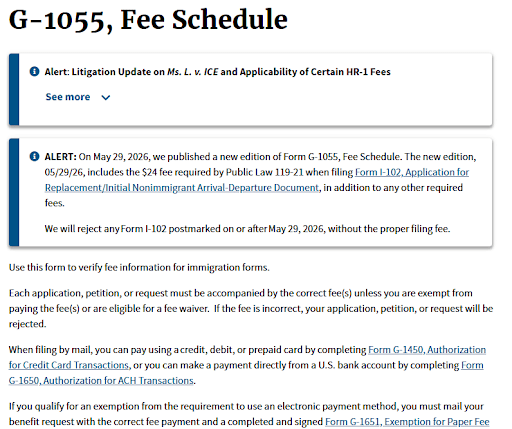 Image Credits – USCIS.gov